How to read palm lines: a beginner’s step-by-step guide
To read palm lines, choose which hand to read, note your hand shape, then find the heart, head, life and fate lines and the mounts. Palmistry is a tradition for reflection: it describes tendencies, never your future.
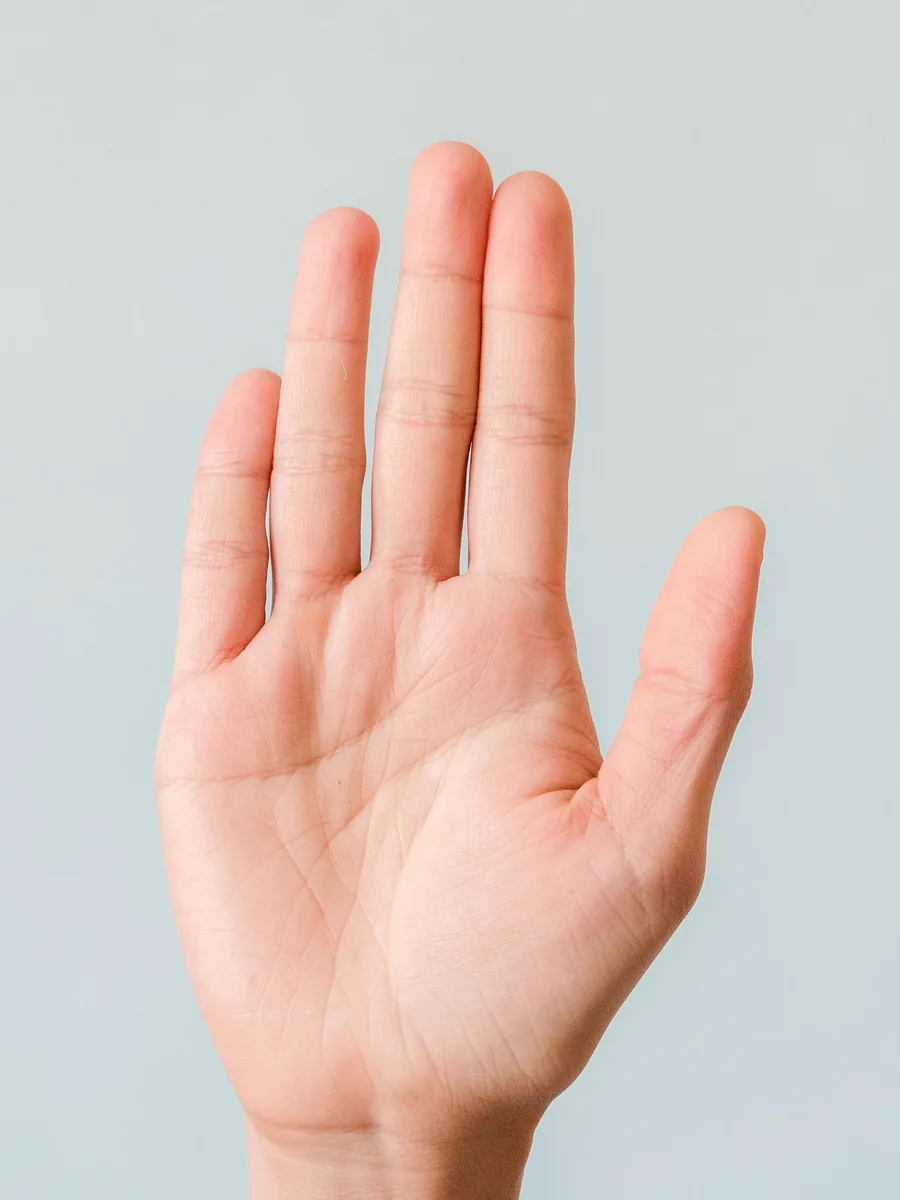
A real palm photo (Kevin Malik, Pexels), traced by the real PalmSays scanner. Your reading is made from your own photo.
Find your 4 main lines
Almost every palm has three long lines, and many have a fourth. Can you find all four on yours?
- Hold up the hand you write with, palm facing you, in daylight.
- Heart line: the first long line under your fingers, starting at the little-finger edge.
- Head line: the next one down, starting between your thumb and index finger.
- Life line curves around the ball of your thumb. Fate line runs up the middle, if you have one.
Our Android app is coming soon, with 2 free readings. The scan on this website opens soon too.
On this page
- What is palm reading?
- What you need to read a palm
- Step 1: Choose which hand to read
- Step 2: Find your hand shape
- Step 3: Read the heart line
- Step 4: Read the head line
- Step 5: Read the life line
- Step 6: Read the fate line
- Step 7: Read the mounts and signs
- Palm reading for a woman or a man
- Common beginner mistakes
- Check yourself: palm reading basics
- Practise: the palm reading quiz
- Questions people ask
- Sources
What is palm reading?
Palm reading, or palmistry, is the old practice of reading the lines, mounts and shape of the hand. Older English books call it chiromancy. In India it is called हस्त रेखा शास्त्र (Hast Rekha Shastra). It is often described as part of सामुद्रिक शास्त्र (Samudrika Shastra), the study of the body’s features. Cheiro’s Palmistry for All (1916) splits the study in two: chiromancy, reading the lines of the palm, and chirognomy, reading the shapes of the hand and fingers (he spells them cheiromancy and cheirognomy). Plain English calls both hand reading. Chinese palm reading is a tradition of its own, which the old books we use mention only in passing.
A reader looks at three things: the four major lines, the raised pads called mounts (पर्वत, parvat), and small marks such as breaks and branches. The books link each of these with a side of character: how you feel, think, meet change and choose.
- Look at the lines, the mounts and the shape of the hand.
- Learn what the old books say about each one.
- Ask yourself “Does this fit me?”
Every meaning below comes from a named book, in our own words. Where those books came from is told in our history of palmistry.
Read each meaning as a question about yourself (“does this fit me?”), not as a forecast.
Palmistry words to know
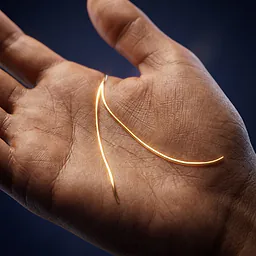
- A long crease across the palm. Palmistry reads four main ones.
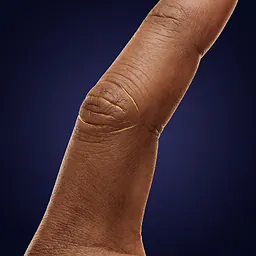
- A fold in the skin. The short ones where the fingers join the palm are finger creases.
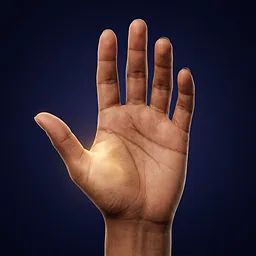
- A soft, raised pad of the palm, such as the ball of the thumb.
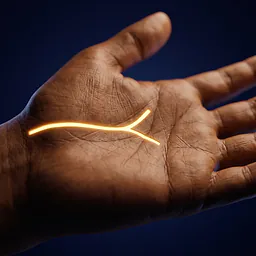
- A line that splits in two at one end.
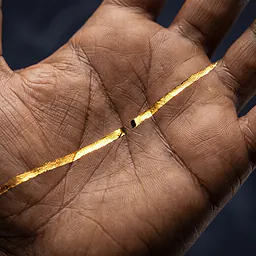
- A gap where a line stops and then starts again.
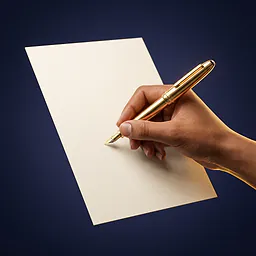
- The hand you write with. Tradition reads it as the life you are making.


The pictures are AI-made 3D images.
More words, with their Hindi names, are in our palmistry terms glossary.
What you need to read a palm
You need good light, both hands and a few minutes. Daylight near a window works best. A single lamp throws shadows that can look like extra lines or breaks. Hold your hand flat and open, with the whole palm in view.
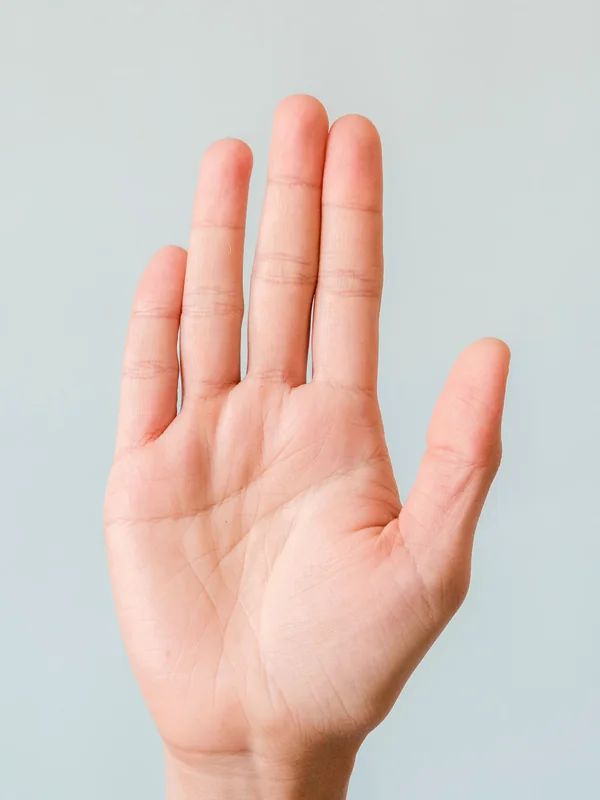
Do Open palm, daylight, close up.
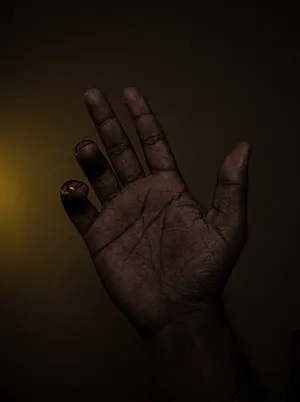
Don’t Too dark. Use daylight.
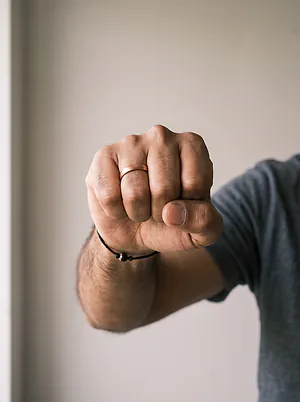
Don’t A closed hand. Open it flat.

Don’t Too far. Fill the frame.
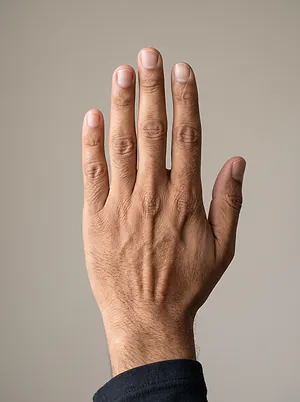
Don’t The back of the hand. Show the palm.


A photo helps, because you can zoom in and compare your two hands side by side. Take one photo of each palm, straight from above, with the crease at your wrist in the frame. PalmSays has a palm photo checker that tells you whether a photo is clear enough to read.

You don’t need a magnifying glass or any special kit. You don’t need to know the terms yet either: each step names what to look for.
Step 1: Choose which hand to read
Start by choosing which hand to read, because palmistry treats your two hands differently. Tradition reads the hand you write with as the life you are making, and the other as what you started with. Cheiro’s Language of the Hand (1900) puts it this way: “The left is the hand we are born with; the right is the hand we make.” Linking this to your writing hand, left or right, is a later convention.

the life you are making

what you started with
So read both hands, and notice where they differ. If you are left-handed, your left hand is your writing hand. Which hand to read explains the traditions in full.

Step 2: Find your hand shape
Before the lines, look at the shape of your whole hand: the palm, and the length and tips of the fingers. Cheiro’s Palmistry for All (1916) sorts hands into seven types:
- Elementary: a short, thick-set hand with short fingers.
- Square: a palm that looks square, with square-cut fingers. Cheiro calls it the practical or useful hand.
- Spatulate: fingertips that widen at the ends, like a spatula. He links it with energy and originality.
- Philosophic: a long, bony hand with knotty joints, linked with a studious, thoughtful nature.
- Conic: a graceful hand with tapering fingers, which he calls the artistic hand.
- Psychic: a long, narrow hand with slender, tapering fingers, which he calls the idealistic hand.
- Mixed: fingers of different types on one hand, linked with versatility.
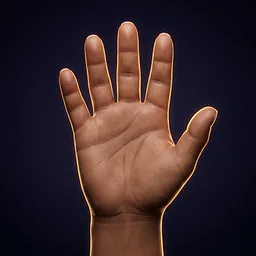
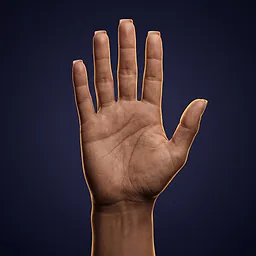
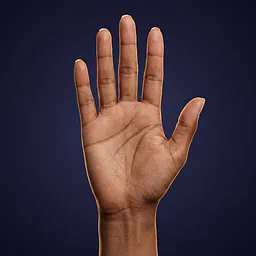
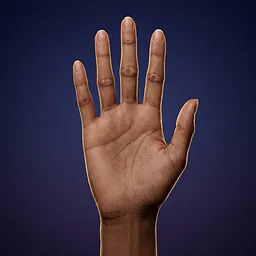
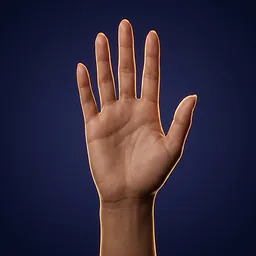
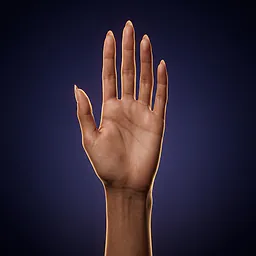
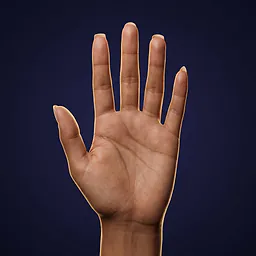


Cheiro judges some of these types harshly. We keep only the shapes and the traits most people would recognise. Many modern websites sort hands into earth, air, fire and water types instead. That system is newer and isn’t in the old books we use. The PalmSays app measures that newer type on your photo, but the older shapes here are judged by eye. Each type is described in types of hands in palmistry.
Look at the thumb and fingers too. Cheiro rates the thumb as highly as the nose on a face and reads it as your natural will power, and his Guide to the Hand reads long fingers as a love of detail in everything. More in fingers in palmistry.

Step 3: Read the heart line
The heart line is the highest long line across your palm, just below the fingers. It starts at the little-finger edge and runs towards the index or middle finger. In Hindi it is हृदय रेखा (hriday rekha). Palmistry reads it for your emotional life: how you feel, show affection and relate to people.
Heart line
Read for: how you feel and show affection.
Three forms to look for
- Ends under the index finger
- Short
- Forked at the end
Three common forms to look for:
- Ending under the index finger: Cheiro and Markun read loyal, steady affection held to high ideals.
- Short: feelings shown sparingly, not always put into words. That describes how feeling is shown, not how much is felt.
- Forked at the end: a balanced, faithful style of affection, with ideals and everyday warmth held together.
Books disagree about which end of this line to read from, so a careful reading shows both views. The heart line guide shows every type with its source.
Step 4: Read the head line
The head line runs across the middle of the palm, below the heart line. It often starts joined to the life line, near the thumb, and then separates. In Hindi it is मस्तिष्क रेखा (mastishk rekha). Palmistry reads it for how you think and decide.
Head line
Read for: how you think and decide.
Three forms to look for
- Straight
- Gently curved
- Forked at the end
Look at its shape first:
- Straight: Cheiro reads practical common sense, a mind that prefers the concrete.
- Gently curved: imagination kept in hand, creative thinking used on a practical footing. A line that slopes steeply is read as a strongly imaginative mind.
- Forked at the end: two ways of thinking at once, practical and imaginative, which gives range but can make choosing harder.
Also note whether it starts joined to the life line. The books call that the more common form, and read a careful, cautious mind. The head line guide covers every type, and a double head line (two separate head lines) has its own guide.
Step 5: Read the life line
The life line curves around the base of the thumb. It starts between the thumb and index finger and sweeps towards the wrist. In Hindi it is जीवन रेखा (jeevan rekha). Palmistry reads it for vitality, stability and how you meet change.
Life line
Read for: energy and how you meet change. Never for how long you live.
Three forms to look for
- A wide curve
- Close to the thumb
- A break
Its length is not read as how long you will live. Even the old books warn against reading it as a count of years. Look at these forms instead:
- A wide curve out into the palm: an outgoing, energetic presence, energy that reaches out towards people.
- A line that stays close to the thumb: energy held closer in, a quieter presence.
- A break: a period of major change in the way life is lived, not illness or harm.
The old books also read the life line for health. The app’s rules leave that out, and so do we. The life line guide explains each type, including the short life line.
Step 6: Read the fate line
The fate line runs up the middle of the palm towards the middle finger. In Hindi it is भाग्य रेखा (bhagya rekha), and in English it is also called the destiny or career line. Palmistry reads it for direction, work and a sense of purpose.
Fate line
Read for: direction and work. Many palms show it faintly, or not at all.
Three forms to look for
- Starts at the wrist
- Starts on the outer side
- Broken
Many palms show a faint fate line or none at all. That is common. The books read a missing fate line as a path that follows choices as they come, not one fixed track. Where you do see one, look at where it starts:
- At the wrist: Markun reads responsibility that arrives early, a sense of duty towards work that starts young.
- On the outer side of the palm (the Moon mount): a path shaped a great deal by other people, where the public or partners play a large part.
- Broken, or changing course: a working life with a real change of direction, rather than one straight road.
The fate line guide shows where it can start and end, and career palmistry shows how the books read it for work.
4 lines, 4 questions
- Heart line How do I feel, and how do I show it?
- Head line How do I think and decide?
- Life line How do I use my energy and meet change?
- Fate line Which direction is my work taking?
Step 7: Read the mounts and signs
The mounts are the soft, raised pads on your palm. Indian palmistry calls them पर्वत (parvat) and links each one with a planet. Press gently around your palm and notice which pads feel full and which feel flat. The books read a well-developed mount like this:
- Guru (Jupiter), under the index finger: ambition and a wish to lead.
- Shani (Saturn), under the middle finger: seriousness and responsibility.
- Surya (Sun), under the ring finger: creativity and a love of beauty.
- Budh (Mercury), under the little finger: communication and a quick wit.
- Shukra (Venus), the large pad at the base of the thumb: warmth and sympathy.
- Chandra (Moon), on the outer edge of the palm, above the wrist: imagination.
- Mangal (Mars) has two mounts. The one near the thumb, just inside the start of the life line, is read for active courage. The one on the outer edge, above the Moon mount, is read for moral courage and self-control.
- Guru गुरु (Jupiter): under the index finger
- Shani शनि (Saturn): under the middle finger
- Surya सूर्य (Sun): under the ring finger
- Budh बुध (Mercury): under the little finger
- Mangal मंगल (Mars): near the thumb
- Shukra शुक्र (Venus): the ball of the thumb
- Chandra चंद्र (Moon): outer edge, above the wrist
- Mangal मंगल (Mars): outer edge
Each mount, with where to find it and what the books read in it, is in the palm mounts guide.
Signs are the small marks on and between the lines: islands, crosses, stars, squares and triangles. The books give each a meaning, but most are too small for a phone photo to show reliably. An honest reading leaves them out. Breaks, forks and branches, on the other hand, show up well.
Smaller lines, such as the marriage line on the edge of the hand, come after the four major ones. The guide to all the palm lines maps them, minor lines such as the girdle of Venus and travel lines included.
Palm reading for a woman or a man
The lines are read the same way for everyone. There is no separate heart line or life line for women and men, and no line reads a woman’s or a man’s fate. What traditions differ on is which hand to read.
Dale’s Indian Palmistry (1895) records an Eastern custom of reading a man’s right palm and a woman’s left. It then advises reading the hand where the lines show most clearly. In this guide we follow the writing-hand tradition for everyone. Which hand to read covers female and male palm reading in full.
Common beginner mistakes
- Reading finger creases as palm lines. The short creases at the base of each finger are finger creases. The heart line is the first long line below them.
- Mixing up the heart and head lines. The heart line starts at the little-finger edge. The head line below it usually starts near the thumb, often joined to the life line.
- Reading only one hand. Tradition compares both, and a line that looks different on each hand is part of the reading.
- Taking shadows for breaks. Side light, a bent palm or a blurry photo can make a line look broken, forked or doubled. Check in even daylight before you read a break, and see do palm lines change for why two photos of one hand rarely match.
- Reading length as lifespan. A short life line is not a short life. Palm lines are not a health test either.
- Treating a reading as a prediction. Palmistry describes tendencies. A reading that gives a date, an illness or a number of children has gone beyond anything a palm can show.
Check yourself: palm reading basics
Three quick questions. Pick an answer to see if you are right.
Practise: the palm reading quiz
The quickest way to learn is to practise. Try spotting each line in the quiz, then look at your own hand again.

When you are ready for your own hand, the PalmSays app traces your lines on your photo and explains what the books say, with the source for each meaning. To weigh it against other apps, see the five checks in best palm reading apps, and what a chatbot does with the same photo in palm reading with ChatGPT.
Quick facts
- Hindi name
- हस्त रेखा शास्त्र (hast rekha shastra), often described as part of सामुद्रिक शास्त्र (samudrika shastra)
- What it looks at
- The lines, the raised pads called mounts (parvat), and the shape of the hand.
- The four major lines
- Heart, head, life and fate. The fate line is often faint or missing, and that is common.
- What you need
- Good daylight, both hands, and a few minutes. A clear photo helps you zoom in and compare.
- Which hand
- Look at both. Tradition reads your writing hand as the life you are making. Which hand to read
- What it can’t do
- Tell dates, lifespan, health, marriage, children or money.
Questions people ask
How do you read palms for beginners?
Start with good light and both hands. Find the heart line at the top, the head line across the middle, the life line around the thumb and the fate line up the centre. Then look at the mounts. Read each meaning as a tendency, not a forecast.
Can you read your own palm?
Yes. You need good light and both hands, and a photo helps you zoom in. Follow the steps in this guide, then use each line’s own guide to match what you see with what the books say.
Which hand do you read in palmistry?
Look at both. Tradition reads the hand you write with as the life you are making and the other as what you started with. More in which hand to read.
What are the four main lines on your palm?
The heart, head, life and fate lines. The fate line is often faint or missing, which is common. The palm lines guide shows the smaller lines too.
What is palmistry called in India?
हस्त रेखा शास्त्र (Hast Rekha Shastra). It is often described as part of सामुद्रिक शास्त्र (Samudrika Shastra), the study of the body’s features.
What can palm reading tell you?
The books read the lines for tendencies: how you feel, think, meet change and choose your direction. Palm reading can’t tell dates, how long you’ll live, your health, marriage, children or money.
Sources (7 books and studies)
- Cheiro, Palmistry for All (1916). Part I, ch. II: The Line of Head; ch. III: The Line of Life; ch. V: The Line of Destiny or Fate; ch. VII: The Line of Heart; ch. XVII: Different Classes of Lines and Right and Left Hands; Part II (its opening: cheiromancy and cheirognomy); ch. I: The Seven Types of Hands, pp. 117–126; ch. II: The Thumb; chs. VI–XII: The Mounts.
- Cheiro, Cheiro’s Language of the Hand (1900). Part I, chs. I–VIII: The shapes of hands, pp. 25–44; ch. IX: The Thumb (Chinese palmistry mentioned); ch. XV: The Mounts, pp. 63–65; Part II, ch. IV: The Right and Left Hands, pp. 77–78; chs. V, VII, X, XI: The Lines of Life, Head, Heart and Fate.
- Cheiro, Cheiro’s Guide to the Hand (1900). Ch. IV: Of the Different Shapes of Fingers (long fingers).
- Leo Markun, What You Should Know About Palmistry (1927). The sections on the lines and the mounts.
- Mrs J. B. Dale, Indian Palmistry (1895). The Hand to Examine.
- S. Kimura and T. Kitagawa (1986). Embryological development of human palmar, plantar, and digital flexion creases. The Anatomical Record, 216(2), 191–197.
- Robert T. Carroll. Palmistry. The Skeptic’s Dictionary.
Meanings on this page are written in our own words from these books. Books whose rights are unclear are used for facts only, never quoted. How we choose sources
See your own lines
Upload one photo of your palm. We trace your lines and show what palmistry says about each one.
- Open palm
- Good light
- Whole hand in the frame
A phone photo shows the main lines and their breaks, forks and branches. Tiny marks such as stars and crosses are too small, so an honest reading leaves them out.
Our Android app is coming soon, with 2 free readings. The scan on this website opens soon too.
Coming soon on Google Play. The Android app is not on Google Play yet. This page will get the link the day it is.
The iPhone app isn’t ready yet. You can keep using this website.
PalmSays is currently listed as Palm Read AI on Google Play. It is the same app.
Or see what the palm reading app for Android reads before you install it.