Hand types in palmistry: which one is yours?
Palmistry sorts hands by the shape of the palm and the length of the fingers. Modern books use four element types (earth, air, fire and water); the classical books use seven types, from square to psychic.
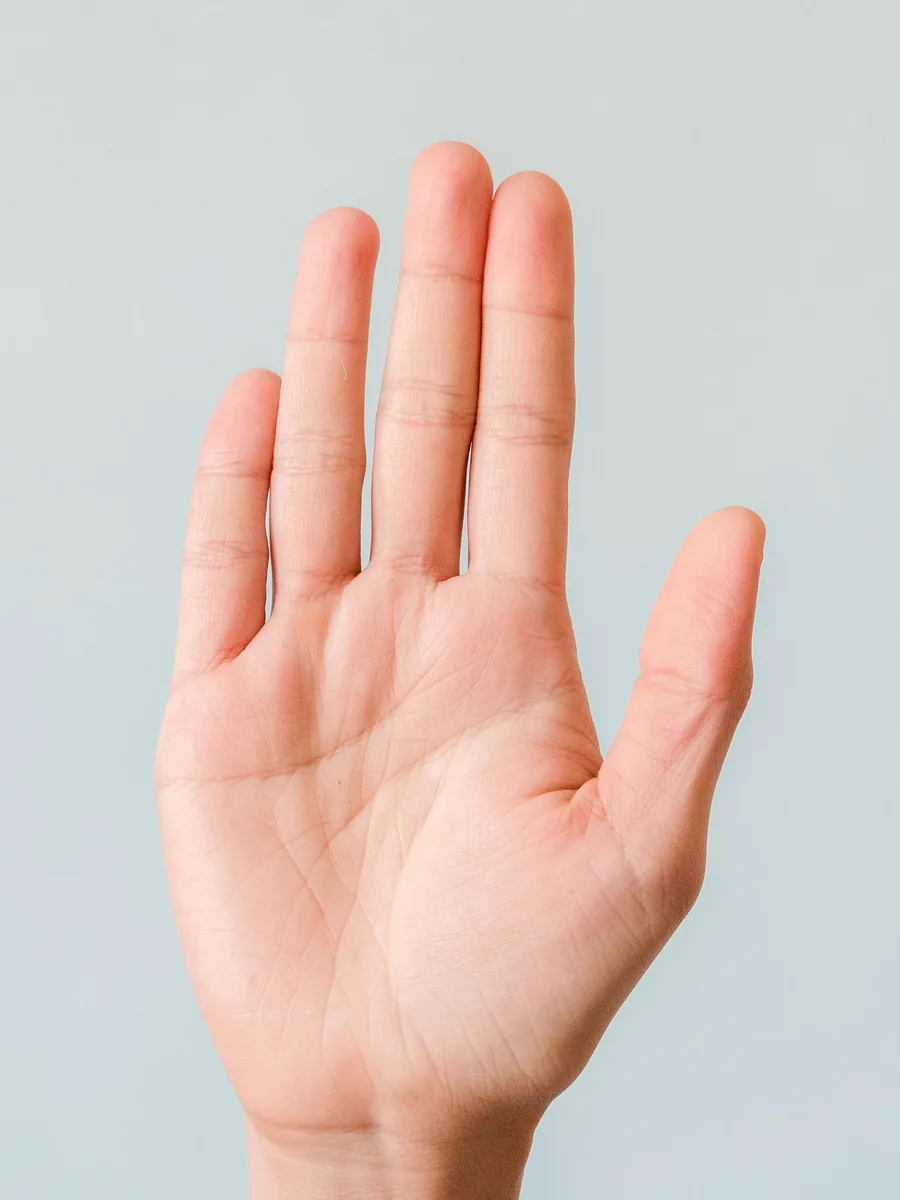
A real palm photo (Kevin Malik, Pexels), traced by the real PalmSays scanner. Your reading is made from your own photo.
What hand type do you have?
Look at your palm, then your fingers. Is your palm square or long, and are your fingers short or long?
- Hold your hand flat, palm up, fingers together.
- Palm: compare its length, from the wrist crease to the base of the middle finger, with its width across the knuckles. About equal is square; clearly longer is long.
- Fingers: compare your middle finger with your palm’s length. Clearly shorter is short; nearly as long is long.
On this page
- How to tell your hand type
- The four element hands (a modern system)
- Cheiro’s seven hand types (the classical system)
- What if your hand fits more than one type?
- How hand type fits the rest of a palm reading
- Hand types in the left and right hand, for women and men
- Check yourself: hand types quiz
- Myths about hand types
- Questions people ask
- Sources
How to tell your hand type
Your hand type comes from two things: the shape of your palm and the length of your fingers. Palmistry calls the study of the hand’s shape chirognomy, the half of palm reading that comes before the lines.
- Measure your palm. Its length runs from the crease at your wrist to the base of your middle finger. Its width runs across the knuckles, below the fingers. If the two are about equal, your palm is square; if the length is clearly greater, it is long.
- Measure your fingers. Compare your middle finger with your palm’s length. Clearly shorter means short fingers; nearly as long means long fingers.
- Look at the tips and joints. Square, rounded, pointed or widening fingertips, and smooth or knotty joints, point to the classical types below.
Our hand type tool uses this rule of thumb: a palm up to 1.15 times as long as it is wide counts as square, 1.25 or more as long, and anything between is “between two types”. Markun (1927) describes an older way to measure: the middle finger from its tip to the knuckle on the back of the hand, the palm from the base of that finger to the wrist.
The four element hands, side by side
- EarthSquare palm, short fingers
- AirSquare palm, long fingers
- FireLong palm, short fingers
- WaterLong palm, long fingers

The four element hands (a modern system)
The earth, air, fire and water hands are a modern way of sorting hands, popular in 20th-century palmistry books. The classical books we cite don’t use it, so we don’t say “the tradition says” about it. It rests on just the two measurements above.
Earth hand
A square palm with short fingers. In this modern system an earth hand is linked with a practical, steady nature: someone who likes doing things with their hands and trusts what is concrete.
Air hand
A square palm with long fingers. An air hand is linked with a curious, talkative mind, at home with ideas, words and other people.
Fire hand
A long palm with short fingers. A fire hand is linked with energy and enthusiasm: quick to start things and drawn to action.
Water hand
A long palm with long fingers. A water hand is linked with sensitivity and imagination, tuned in to feelings and moods.
Cheiro’s seven hand types (the classical system)
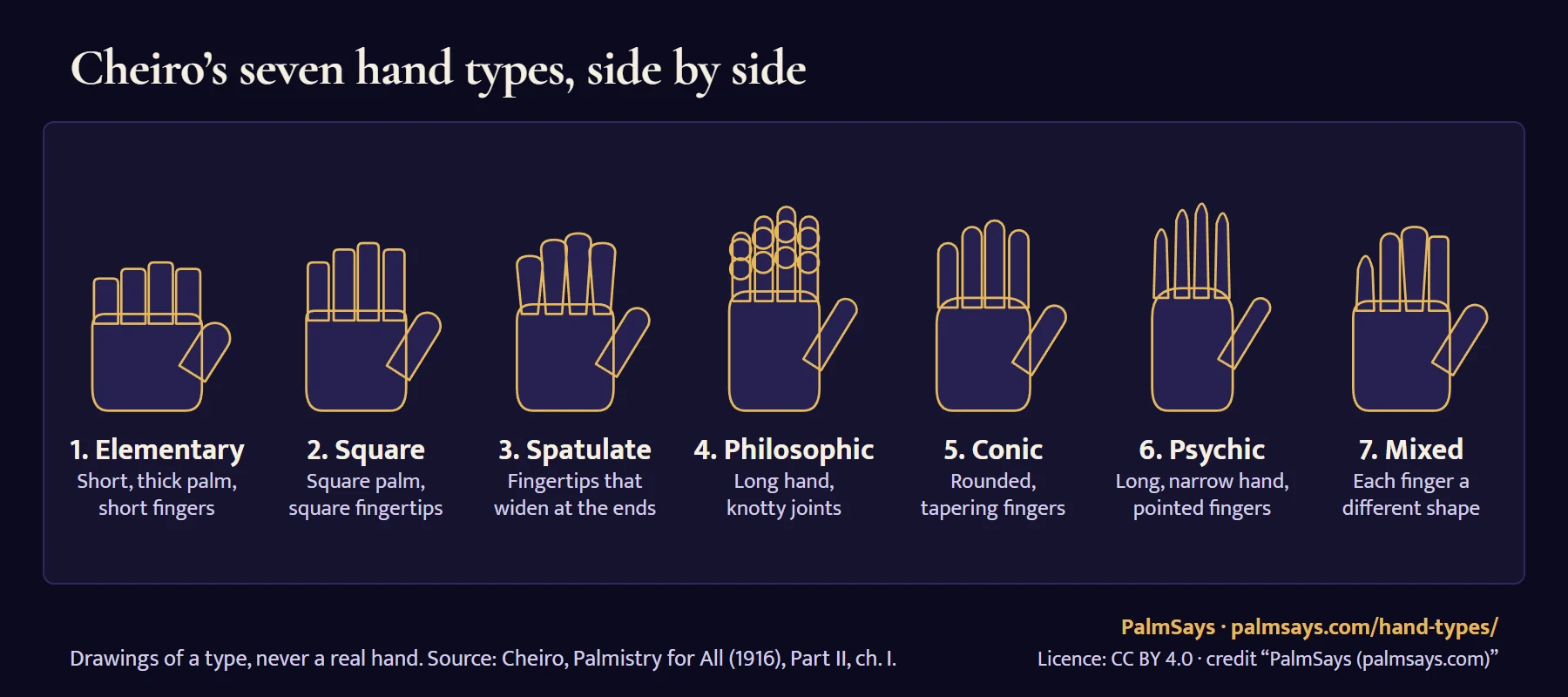
The older system has seven types. The French writer Casimir d’Arpentigny set them out, and Edward Heron-Allen’s 1886 translation gives his names: the elementary (large-palmed), the necessary (spatulate), the artistic (conic), the useful (square), the philosophic (knotted), the psychic (pointed) and the mixed hand. Cheiro’s Palmistry for All (1916) follows the same seven.
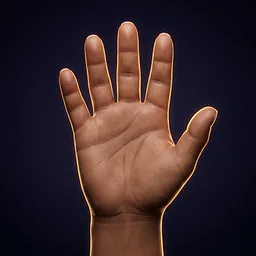
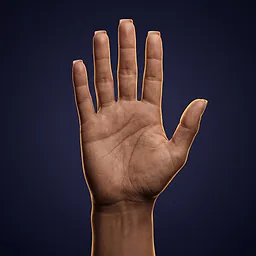
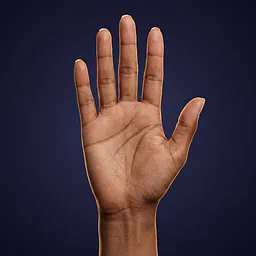
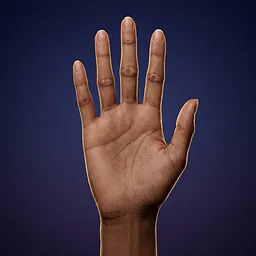
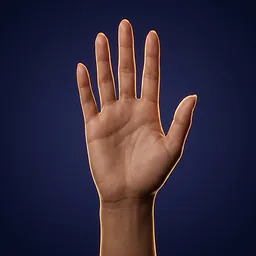
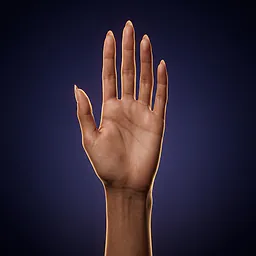
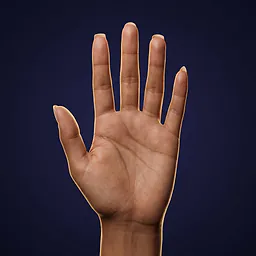


Not every writer agreed. Adolphe Desbarrolles, quoted in Heron-Allen’s notes, thought the classification useless: hands may resemble one another, he said, but nature never repeats itself. So read a type as a rough guide, not a box.
Elementary hand
A short, thick-set palm with short fingers and a short thumb. Cheiro judges this type harshly, in words we won’t repeat; we keep only the shape.
Square hand
A palm that looks square, straight at the wrist and at the base of the fingers, with square-cut fingertips and a long thumb. Cheiro calls it the practical or useful hand: logical, methodical and painstaking, believing things on proof.
Spatulate hand
Fingertips that widen at the ends, like a spatula, on an irregular palm. Cheiro reads untiring energy, originality and a love of invention. He adds that a palm widest at the base of the fingers is more practical, and one widest at the wrist more impulsive.
Philosophic hand
A long, bony, angular hand with knotty finger joints. Cheiro reads a studious, thoughtful nature, a great reader, and says the knotted joints give carefulness and a love of detail.
Conic hand
A graceful hand with tapering, rounded fingers, which Cheiro calls the artistic hand. He reads an artistic temperament that loves beautiful surroundings and is sensitive to colour and music, and says the firmer the hand, the more its owner tends to make of that gift.
Psychic hand
A long, narrow hand with slender, pointed fingers, which Cheiro calls the idealistic hand. He reads a nature that lives among ideals and dreams more than practical matters. His other remarks about this type are dated and bleak, and we leave them out.
Mixed hand
Fingers of different types on one hand, such as one pointed, one square and one spatulate, or a palm of one type with mixed fingers. Cheiro reads versatility: someone who can turn to many things and talk on almost any subject.
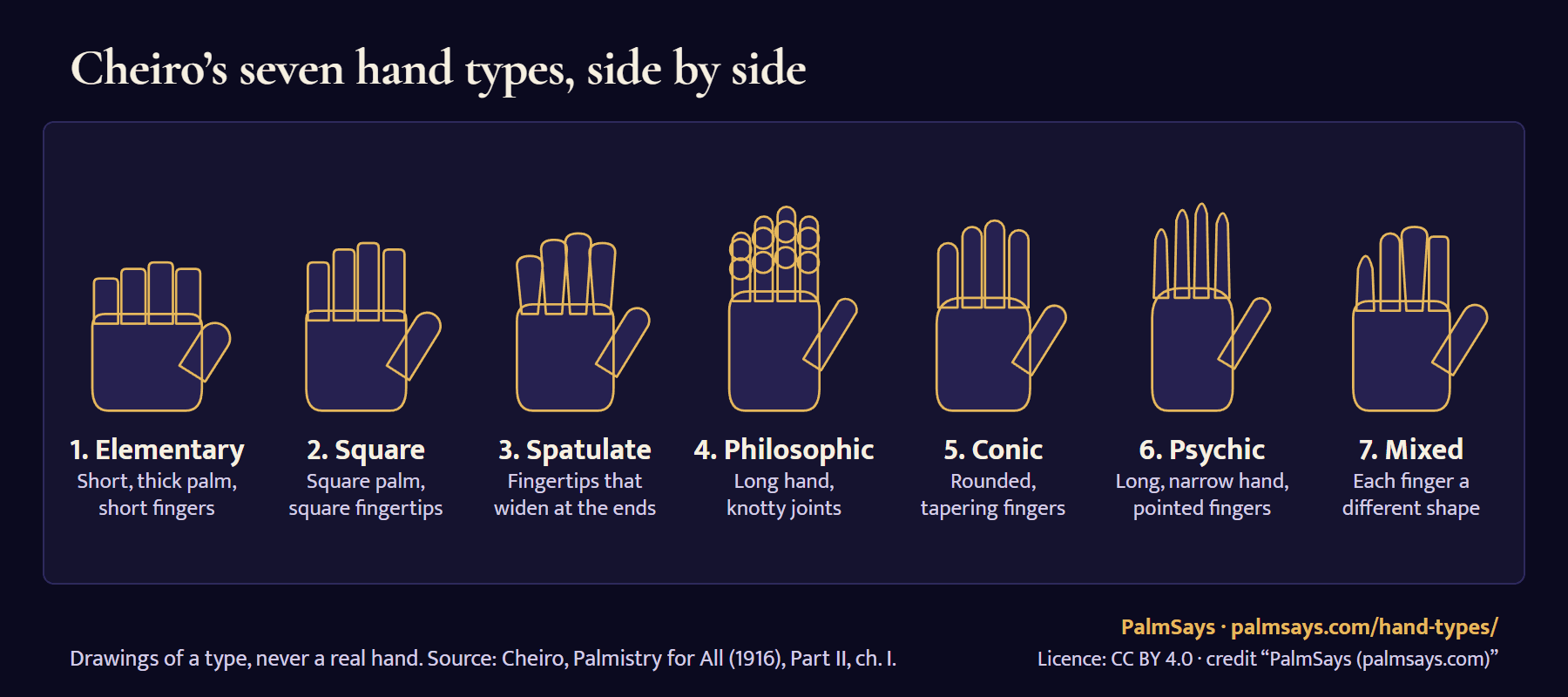
All seven types side by side, as a chart you can save:
What if your hand fits more than one type?
Many hands don’t match one picture exactly, and the books expect that. Cheiro’s Language of the Hand (1900) describes a square palm with long, short, knotty, spatulate, conic or pointed fingers, each read a little differently. In Palmistry for All he notes that a square palm with philosophic fingers is more common than the pure philosophic hand.
So read the palm and the fingers separately:
- The palm gives the base: square is read as practical, long as more imaginative.
- The fingers add the detail. Cheiro reads long fingers as a love of detail and short fingers as quick and impulsive, taking things in as a whole. The fingers in palmistry guide covers length, joints, gaps and the thumb.
If a measurement sits right between two types, say so. That is an honest answer, not a failed reading.
How hand type fits the rest of a palm reading
Hand shape is the first thing a reader looks at, before the lines. Cheiro reads the lines against the type of hand: in Language of the Hand he says a sun line is more heavily marked on philosophic, conic and psychic hands, and means less there than the same line on a square or spatulate hand. The palm mounts are read with the shape too.
Shape first, then the lines: a type is the frame the rest of the reading sits in, not a verdict on its own.
Next come the four main lines. How to read palm lines walks through them in order, and the lines on your palm guide shows them on one chart. The palmistry terms glossary explains each hand type in one sentence.
Hand types in the left and right hand, for women and men
Hand types are read the same way for everyone; there is no separate type for women or men. Your two hands are usually the same type, but compare them. Cheiro notes that work and exercise may enlarge or broaden a hand, but its type stays recognisable. Which hand to read explains why tradition reads the two hands differently.
Check yourself: hand types quiz
Three quick questions. Pick an answer to see if you are right.
Myths about hand types
- MythEarth, air, fire and water hands come from ancient palmistry.
- Reality
They are a modern system. The classical books use seven types, from the elementary hand to the mixed hand.
- MythYour hand type decides your career.
- Reality
The books link types with tendencies, such as a practical or an imaginative bent. Even Cheiro says the conic hand’s gift depends on the effort its owner makes.
- MythEvery hand fits exactly one type.
- Reality
Many hands are mixed or sit between two types, and the books describe these combinations on purpose.
Quick facts
- Hindi name
- हाथ की बनावट (haath ki banavat), the shape of the hand
- Two systems
- Modern: four element hands (earth, air, fire, water). Classical: seven types (d’Arpentigny, Cheiro).
- What is measured
- The palm’s length against its width, and the middle finger against the palm.
- Older name
- Chirognomy: reading the shape of the hand. Reading the lines is chiromancy.
- Which hand
- Look at both. Shape is usually alike on the two hands. Which hand to read
- What the app reads
- The PalmSays app measures hand shape on your palm photo: palm length against width, and middle finger against palm. The free hand type tool here does the same measurement on your phone.
Questions people ask
What are the 4 hand types in palmistry?
In the modern system: earth (square palm, short fingers), air (square palm, long fingers), fire (long palm, short fingers) and water (long palm, long fingers). The classical books don’t use this system.
What is a fire hand in palmistry?
A long palm with short fingers. In the modern element system it is linked with energy and enthusiasm: quick to start things and drawn to action.
What are Cheiro’s seven hand types?
Elementary, square, spatulate, philosophic, conic, psychic and mixed. He took them from d’Arpentigny, the French writer who first set them out.
How do I find my hand type?
Compare your palm’s length with its width, then your middle finger with your palm. The hand type tool measures both on your own photo.
Can my hand type be a mix?
Yes, and often it is. The books call a hand with fingers of different types a mixed hand, and many hands sit between two types.
Does hand shape decide my career?
No. The books link each type with tendencies, such as a practical or an imaginative bent. Cheiro himself says that whether the conic hand’s artistic bent comes to anything depends on the head line and on effort.
Sources (4 books and studies)
- Cheiro, Palmistry for All (1916). Part II, ch. I: The Study of the Shape of the Hand (The Seven Types of Hands).
- Cheiro, Cheiro’s Language of the Hand (1900). Part I, chs. I–VIII: Of the Shapes of Hands and Fingers, pp. 25–44 (ch. III, The Square Hand and its Subdivisions); ch. XI: The Fingers, pp. 53–55; Part II, ch. XII: The Line of Sun, p. 106.
- Casimir Stanislas d’Arpentigny (1886). The Science of the Hand (La science de la main), translated by Edward Heron-Allen. Section I, sub-section I, The Classification of Hands, ¶ 88, p. 95, with the translator’s note 103 quoting Desbarrolles (London: Ward, Lock & Co.).
- Leo Markun, What You Should Know About Palmistry (1927). The sections on the types of hands and on measuring the fingers and the palm.
Meanings on this page are written in our own words from these books. Books whose rights are unclear are used for facts only, never quoted. How we choose sources
See your own lines
Upload one photo of your palm. We trace your lines and show what palmistry says about each one.
- Open palm
- Good light
- Whole hand in the frame
A phone photo shows the main lines and their breaks, forks and branches. Tiny marks such as stars and crosses are too small, so an honest reading leaves them out.
Our Android app is coming soon, with 2 free readings. The scan on this website opens soon too.
Coming soon on Google Play. The Android app is not on Google Play yet. This page will get the link the day it is.
The iPhone app isn’t ready yet. You can keep using this website.
PalmSays is currently listed as Palm Read AI on Google Play. It is the same app.
Or see what the palm reading app for Android reads before you install it.